
Bromine gas (Br₂ gas) is a member of the halogen family — a group of highly reactive elements that includes chlorine and iodine. Unlike most elements, bromine is a liquid at room temperature, producing dense, reddish-brown vapours with a strong and unpleasant odour. These vapours are not just a distinctive feature; they are also a sign of the gas’s hazardous nature.
In industry, bromine element compounds are valued for their disinfectant properties, their role in chemical manufacturing, and their effectiveness in water treatment systems. Yet, the very reactivity that makes bromine useful also makes it dangerous. Without proper control, bromine vapour can harm human health, corrode equipment, and damage the environment.
Bromine is a halogen element with the atomic number 35 and the chemical symbol Br. In its elemental state, it forms diatomic molecules, Br₂, meaning each molecule contains two bromine atoms bonded together.
Physical state and appearance
At room temperature, bromine is unique among non-metals as it exists as a dense liquid. This liquid has a deep red-brown colour and evaporates readily into a similarly coloured vapour. The vapour has a pungent, irritating smell that can be detected at very low concentrations — an early warning sign of its presence.
Corrosivity and reactivity
Bromine is highly corrosive, attacking metals and organic materials alike. It reacts vigorously with many substances, including aluminium, phosphorus, and certain hydrocarbons. Because of this reactivity, bromine gas is a valuable reagent in industrial chemistry but must be stored and handled with care.
Density and dispersion
The gas is heavier than air, which means it tends to sink and accumulate in low areas such as trenches, sumps, and basements. This behaviour increases the risk of high local concentrations in confined or poorly ventilated spaces.
Solubility
Bromine is moderately soluble in water and dissolves more readily in organic solvents. In water, it reacts to form hydrobromic acid and hypobromous acid — both of which are corrosive and toxic.
These combined properties mean bromine gas presents both chemical and physical hazards, making robust containment and monitoring essential in any setting where it is used or stored.
Bromine occurs naturally, but always in combination with other elements, most commonly as bromide salts. These bromides are found in seawater, salt lakes, and underground brine deposits. The global average concentration of bromine in seawater is low — around 65 parts per million — but certain locations have much higher concentrations, making extraction more viable.
Industrial extraction
Commercial production typically involves pumping bromide-rich brine to the surface and treating it with chlorine gas. This process oxidises bromide ions (Br⁻) to form elemental bromine (Br₂), which is then separated and purified. The final product may be sold as liquid bromine in sealed containers or used on-site to produce bromine compounds.
Geographic sources
Large-scale bromine production facilities are located in regions with naturally high bromide content in brine. Germany, Israel, and the United States are among the leading producers. Smaller operations also exist in other parts of the world where conditions allow.
Industrial release points
In addition to dedicated production plants, bromine gas can be generated as a by-product of other industrial processes, such as the manufacture of certain pesticides, flame retardants, and pharmaceuticals. Water treatment facilities using bromine-based disinfectants can also release small amounts during handling, storage, or dosing.
Identifying and controlling these potential release points is an essential step in preventing accidental exposure and environmental contamination.
The chemical reactivity of bromine makes it an important raw material for a variety of industrial applications. Bromine uses span water treatment, sanitation, chemical manufacturing, and other specialised processes.
Water disinfection and treatment
Bromine compounds, such as sodium bromide and bromine chloride, are widely used to disinfect swimming pools, spas, and cooling towers. Unlike chlorine, bromine remains effective at higher temperatures and in water with varying pH, making it particularly useful in heated pools and hot tubs. It also forms fewer odorous by-products, which improves user comfort.
Chemical manufacturing
Bromine is a key ingredient in producing brominated flame retardants, which are added to plastics, textiles, and electronics to reduce flammability. It is also used in the synthesis of certain pesticides, fumigants, and dyes. In pharmaceuticals, bromine-containing compounds can serve as intermediates in drug production.
Industrial sanitation
Bromine-based solutions are used for microbial control in industries such as paper manufacturing, food processing, and oil drilling. These applications take advantage of bromine’s ability to inactivate bacteria, viruses, and algae quickly and effectively.
Specialised processes
In smaller-scale laboratory work, bromine is used as a reagent in organic synthesis, particularly in reactions involving halogenation.
While these uses are valuable, they demand careful storage, transportation, and application methods to reduce the risk of leaks or uncontrolled releases. Facilities that use bromine should always pair its benefits with robust detection and mitigation systems.
Bromine gas is toxic and corrosive, capable of causing harm at very low concentrations. Exposure can occur through inhalation, skin contact, or eye contact, with inhalation being the most common route in industrial settings.
Short-term exposure effects
● Respiratory irritation: Inhalation can cause immediate irritation of the nose, throat, and lungs. Early symptoms include coughing, sneezing, and a burning sensation in the airways.
● Breathing difficulties: High concentrations may lead to bronchospasm — a tightening of the airways — resulting in shortness of breath and wheezing.
● Eye irritation: Contact with bromine vapour or liquid can cause redness, tearing, pain, and swelling. Severe cases can lead to corneal damage.
● Skin burns: Liquid bromine and concentrated vapours are corrosive to skin, producing painful blisters or ulcers.
Long-term exposure risks
Repeated or prolonged exposure may cause chronic respiratory conditions such as bronchitis or asthma-like symptoms. In severe cases, permanent lung damage can occur. Skin sensitisation is also possible, leading to dermatitis after repeated contact.
First aid response
● Inhalation: Remove the affected person from the contaminated area into fresh air immediately. Keep them at rest and seek urgent medical attention.
● Skin contact: Remove contaminated clothing and rinse skin thoroughly with water for at least 15 minutes. Do not rub or apply ointments unless directed by medical personnel.
● Eye contact: Flush the eyes gently with clean water for at least 15 minutes, keeping eyelids open. Seek immediate medical attention.
Why vigilance is needed
Bromine vapour is heavier than air and can accumulate in confined or low-lying spaces, making it more dangerous in enclosed environments. Even if a leak is not immediately visible, harmful concentrations may still be present. This is why continuous monitoring is a critical part of bromine safety programmes.
Bromine is harmful to the environment, particularly aquatic systems. When released into water, it reacts to form compounds that can disrupt natural biological processes.
Impact on aquatic life
Fish and other aquatic organisms are especially sensitive to bromine and its by-products. Exposure can damage gill tissues, impair breathing, and affect reproduction. Even low concentrations may be toxic over time, leading to population declines in sensitive species.
Water chemistry changes
Bromine’s strong oxidising properties can alter the balance of natural water chemistry, affecting nutrient cycles and the breakdown of organic matter. These changes can ripple through the food web, reducing biodiversity.
Soil contamination
Bromine compounds can bind to soil particles or leach into groundwater, potentially contaminating drinking water sources. This is a particular concern near industrial sites, where accidental releases or improper waste disposal may occur.
Atmospheric effects
Although bromine gas does not persist in the atmosphere for long periods, it can contribute to chemical reactions that degrade air quality. In certain conditions, bromine compounds can also affect ozone levels in the lower atmosphere.
Minimising bromine’s environmental footprint requires strict handling, spill prevention, and wastewater treatment measures. Environmental monitoring is often necessary in industries with high bromine usage to detect and address contamination promptly.
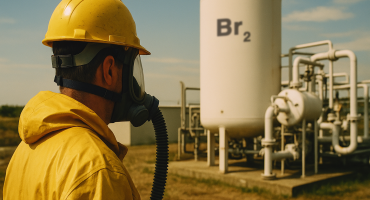
Because of its corrosive and toxic nature, bromine gas demands careful handling and storage procedures at every stage — from delivery to disposal.
Personal protective equipment (PPE)
Workers handling bromine should be equipped with:
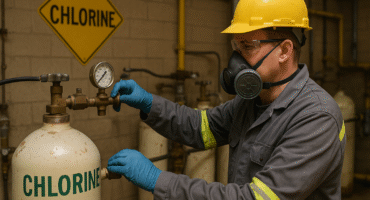
● Chemical-resistant gloves (e.g., Viton or neoprene) to protect against liquid splashes and vapour permeation.
● Safety goggles or full-face shields to guard against eye injuries.
● Respiratory protection, such as full-face respirators with suitable cartridges, or supplied-air respirators in high-risk areas.
● Protective clothing made from bromine-resistant materials.
Handling practices
● Always work in well-ventilated areas or use local exhaust ventilation to capture vapours.
● Keep containers sealed when not in use.
● Avoid any direct contact with the skin or eyes.
● Use closed transfer systems wherever possible to limit exposure.
Storage conditions
● Store in tightly closed, corrosion-resistant containers.
● Keep in a cool, dry, well-ventilated space, away from sunlight and heat sources.
● Segregate from incompatible substances, such as ammonia, acetylene, and strong reducing agents.
● Maintain secondary containment to capture leaks or spills.
Emergency preparedness
Spill kits, eyewash stations, and emergency showers should be readily accessible in areas where bromine is handled. Staff should be trained in containment procedures and first aid for exposure.
Bromine gas is used in many industrial sectors, but it is most commonly associated with:
● Water treatment facilities — where it acts as a disinfectant for swimming pools, spas, and cooling towers.
● Chemical manufacturing plants — producing flame retardants, pesticides, and pharmaceuticals.
● Oil and gas operations — where bromine compounds are used in drilling fluids and completion operations.
These settings often involve large quantities of bromine, stored and handled under conditions that can create significant exposure risks. Leaks, equipment failures, or accidental releases can lead to dangerous concentrations in the workplace.
Continuous monitoring is essential. Fixed detection systems can provide early warning of vapour leaks, allowing swift action to protect workers and maintain operational safety.
The Midas Extractive Transmitter is a high-performance, fixed-point gas detector designed for monitoring toxic gases such as bromine. It offers:
· High sensitivity for early detection.
· Compatibility with multiple sensor types.
· Integration with alarm systems and ventilation controls.
Action step: If your site uses or stores bromine, speak with OBW Technologies about implementing a monitoring system tailored to your facility’s layout and risk profile.
You can learn more about the Midas Extractive Transmitter Here.
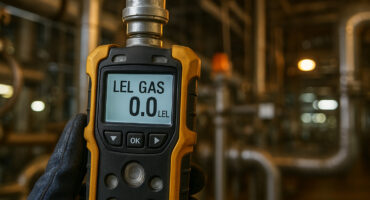
Because bromine gas is both toxic and corrosive, detecting its presence quickly is critical. Monitoring can be achieved through portable devices, fixed installations, or — in high-risk facilities — a combination of both.
Portable gas detectors
These handheld units are ideal for maintenance crews, safety inspections, and emergency response teams. They allow workers to check specific areas before entering, verify that repairs have eliminated leaks, and test confined spaces. Portable units are particularly valuable when work is performed in multiple locations or where bromine is not always present. (Browse our range: Portable Gas Detectors)
Fixed gas detection systems
In facilities where bromine is handled regularly, fixed systems provide continuous real-time monitoring. They are strategically installed near storage tanks, transfer points, and other high-risk areas. These systems can trigger alarms, activate ventilation systems, or even shut down equipment automatically when high concentrations are detected. (Explore our options: Fixed Gas Detection Systems)
Integrated safety approach
A well-designed detection programme often combines portable units for spot checks with fixed systems for ongoing monitoring. This layered approach offers protection during both routine operations and unexpected incidents, ensuring workers are warned in time to respond effectively.
Stay ahead of hazards — contact OBW Technologies to equip your site with the right mix of portable and fixed bromine gas detectors.
Bromine’s strong reactivity underlies both its usefulness and its hazards. Understanding these reactions is essential for safe industrial handling.
Reactions with metals
Bromine reacts with many metals — such as aluminium, mercury, and sodium — to form metal bromides. These reactions can be exothermic, releasing heat and potentially hazardous vapours.
Reactions with hydrogen
When combined with hydrogen, bromine forms hydrogen bromide (HBr), a colourless but corrosive gas that dissolves readily in water to form hydrobromic acid. This acid is highly irritating to skin and mucous membranes.
Organic reactions
In organic chemistry, bromine readily adds to carbon–carbon double bonds, a process known as halogenation. This reaction is used in the manufacture of brominated flame retardants and other chemicals.
Incompatibilities
Bromine should never be allowed to contact ammonia, acetylene, or strong reducing agents, as these can trigger violent reactions, explosions, or the release of toxic by-products.
By knowing which reactions are likely and which should be avoided, facilities can design processes and storage systems that minimise risk while taking full advantage of bromine’s industrial benefits.
Bromine is regulated under several Irish, EU, and international frameworks because of its toxicity, corrosivity, and environmental hazards. These rules apply to production, handling, storage, labelling, and disposal.
Bromine facts relevant to compliance:
● Classified as toxic, corrosive, and dangerous for the environment under the EU’s Classification, Labelling and Packaging (CLP) Regulation.
● Occupational Exposure Limits (OELs) are set to keep airborne concentrations well below harmful levels. For example, the EU indicative OEL is 0.1 ppm as an 8-hour time-weighted average.
● REACH (Registration, Evaluation, Authorisation and Restriction of Chemicals) requires registration of bromine use above certain thresholds and imposes safety data and labelling requirements.
● Employers must prepare and maintain Safety Data Sheets (SDS) and ensure that employees handling bromine are trained in hazard awareness and emergency response.
Compliance is more than a legal requirement — it is a critical part of keeping workers safe and preventing environmental damage. Regular audits, equipment checks, and staff refresher training are all part of a strong safety management plan.
1. Is Br₂ a bromine gas?
Yes. The bromine gas formula is Br₂, which means each molecule contains two bromine atoms bonded together. In its natural state at room temperature, bromine is a liquid, but it readily evaporates into a reddish-brown vapour. This vapour is highly toxic and corrosive.
2. What does bromine gas do to humans?
Bromine gas can cause immediate irritation to the eyes, skin, and respiratory system. Inhaling it may result in coughing, chest tightness, and breathing difficulty. At higher concentrations, it can lead to severe lung damage or even be fatal. Direct skin or eye contact with liquid bromine or concentrated vapour can cause chemical burns. Prompt medical attention is required in all cases of exposure.
3. Is bromine dangerous?
Yes, absolutely — it is classified as a toxic and hazardous substance. Even short-term exposure to high concentrations can cause serious injury, and chronic exposure can result in long-term respiratory or skin problems. This is why correct handling, protective equipment, and reliable gas detection systems are essential wherever bromine is used.
If your facility uses or stores bromine, having the right detection and safety measures in place is non-negotiable. OBW Technologies can help you assess risks, identify the best monitoring solutions, and provide equipment tailored to your operational needs.
Our expertise covers everything from portable gas detectors for on-the-spot checks to fixed gas detection systems for continuous, real-time monitoring. We also supply advanced detection devices like the Midas Transmitter, designed to detect bromine and other toxic gases at the earliest possible stage.
A safe workplace is a productive workplace. Let our team help you put robust safety systems in place so your operations run smoothly, your workers are protected, and you remain fully compliant with regulations.
Contact OBW Technologies today to schedule a consultation or request a site survey.
From the Blog
If you have any questions about our products or services, please feel free to contact us.