The Dangers of Welding: Managing Fumes, Gases, and Invisible Hazards
Welding is a fundamental process across the manufacturing, construction, and engineering sectors. While the physical hazards of the welding arc – such as extreme heat, sparks, fire, explosion risks, and ultraviolet (UV) radiation – are well understood and visibly obvious, the most severe threats to a worker’s health are often invisible.
The welding process generates a complex working environment filled with hazardous fumes and toxic gases. Without stringent control measures, protective gear, and continuous monitoring, exposure to these substances can lead to devastating short-term injuries and chronic health conditions. Understanding these risks is an absolute requirement for workplace safety.
The Core Risks of Welding Fumes
At its core, the welding process generates hazardous fumes and gases directly from heated metals. As the intense temperatures of the welding arc melt the base materials, filler wires, and protective coatings, they react and vaporise, releasing a highly complex and toxic mixture of airborne particulates and vapours directly into the working environment. This creates welding fumes – a dense plume of fine dust and toxic substances that can easily be inhaled deep into the lungs.
Recent scientific studies and evidence have fundamentally changed how these hazards are treated in the workplace:
No safe level of exposure: According to the Health and Safety Authority (HSA) in Ireland and the HSE in the UK, there is no known safe level of exposure to welding fumes. All fumes are categorised as hazardous.
Cancer risks: The International Agency for Research on Cancer (IARC) classifies all welding fumes as Group 1 carcinogens, meaning there is sufficient evidence that they cause lung cancer in humans.
Toxic substances: Depending on the base metal and electrodes used, fumes can contain highly dangerous materials, including manganese, nickel, and hexavalent chromium (frequently produced when welding stainless steel).
Short-Term Health Effects
The health effects of welding hazards are not limited to long-term exposure. Even brief periods of inhalation without adequate protection can result in immediate, severe symptoms.
Respiratory and sensory irritation: Workers frequently experience acute irritation of the eyes, nose, and throat.
Physical illness: Dizziness, nausea, and severe breathing difficulties are common early indicators of overexposure.
Metal Fume Fever: Inhaling zinc or copper oxide fumes can cause this flu-like condition, characterised by chills, fever, muscle aches, and a dry throat.
Pneumonia: Welders are highly susceptible to occupational pneumonia caused by the inhalation of fine metal particulates.
These risks multiply exponentially when welding activities take place in confined spaces or areas with poor natural airflow, where toxic substances can accumulate rapidly in the worker’s breathing zone.
Invisible Gas Hazards
Beyond the physical particulate matter, the welding process is notorious for releasing highly dangerous gases into the working environment. Many welding gases share three distinct traits:
They are colourless.
They are odourless.
They are impossible to detect without equipment.
Because these toxic and asphyxiating gases lack any visible presence or smell, they bypass our natural human senses entirely. This makes them a silent threat in the workplace, meaning a welder can be surrounded by a lethal concentration of gas – or a severely oxygen-deficient atmosphere – without receiving any physical warning until debilitating symptoms begin to take hold.
Depending on the type of welding and the shielding gases used, the atmosphere can quickly become dangerous.
Gas Type
Source in the Welding Process
Primary Hazard
Carbon Monoxide (CO)
By-product of incomplete combustion.
Highly toxic; binds to haemoglobin, causing asphyxiation, dizziness, and nausea.
Nitrogen Oxides (NOx)
Created when the extreme heat of the arc reacts with surrounding air.
Severe respiratory irritant; can cause fluid in the lungs (pulmonary oedema).
Ozone (O3)
Produced by the reaction of UV radiation with oxygen.
Causes chest pain, throat irritation, and long-term lung damage at low levels.
Argon & Helium
Used as inert shielding gases.
Non-toxic but displace oxygen, creating an immediate asphyxiation risk in confined spaces.
Why Early Detection Matters
The physical effects of inhaling toxic welding gases are rarely obvious the moment exposure begins. Because these substances entirely bypass human senses, gas exposure effects are often not immediately noticeable. A welder fully focused on the arc may not realise they are in danger until physical symptoms – such as dizziness, nausea, or a scratchy throat – begin to appear.
Unfortunately, relying on the human body to detect these changes is incredibly dangerous. By the time physical symptoms manifest, significant and potentially damaging exposure to carcinogens or asphyxiating gases has already taken place.
This makes proactive gas detection the ultimate early warning system. In a working environment where invisible hazards are present, safety equipment must step in to identify risks long before they compromise a worker’s health.
Portable detectors are specifically designed to address this challenge, offering targeted, individual protection. To be effective, they rely on three core principles:
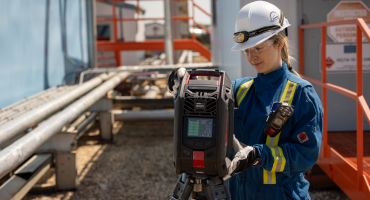
Worn in the breathing zone: Gas concentrations can vary drastically within a single confined space or workshop. By clipping a portable detector near the collar or lapel, safety managers ensure the device is measuring the exact air the welder is actively inhaling.
Provide real-time monitoring: These devices continuously sample the surrounding air, tracking fluctuations in gas and oxygen levels second by second, rather than relying on periodic spot checks.
Deliver instant alerts: Welding processes are loud, visually intense, and demand heavy concentration. When a hazardous threshold is breached, portable detectors trigger unmistakable alerts – combining high-decibel sirens, bright flashing lights, and intense vibration. This multi-sensory alarm cuts through the noise and PPE, warning the worker to stop activities and evacuate the area immediately.
Recommended Solution: BW Clip 2yr Real Time (Single Gas / O2 Clip)
For operations requiring straightforward, everyday protection without the burden of constant maintenance, the BW Clip 2yr Real Time is an industry standard.
Maintenance-Free: This lightweight unit provides two years of continuous personal monitoring without the need for battery charging or sensor replacements.
Targeted Detection: It is highly effective as an O₂ clip to monitor oxygen depletion, or can be configured for Hydrogen Sulphide (H₂S), Carbon Monoxide (CO), or Sulphur Dioxide (SO₂).
Ease of Use: Workers simply turn it on with one-button operation, clip it to their clothing, and let the device monitor the environment.
Lone Worker Risk Factors
While welding inherently carries significant physical and respiratory risks, there is an exponentially increased danger when working alone or in isolated areas of a site. When a lone worker is exposed to toxic welding fumes or oxygen-displacing gases without the safety net of a nearby colleague, a routine maintenance job can rapidly escalate into a life-threatening emergency.
In these isolated scenarios, the margin for error effectively disappears. Safety managers must account for three severe challenges that arise when lone workers encounter invisible gas hazards:
Delayed hazard recognition: Because many toxic and asphyxiating welding gases are colourless and odourless, a lone worker may become disoriented or lose consciousness before realising a leak has occurred. Without a ‘buddy’ system in place to spot sudden changes in the worker’s behaviour, posture, or operating environment, the dangerous atmosphere goes entirely unnoticed.
Difficulty calling for help: If a welder is overcome by oxygen depletion or a sudden build-up of carbon monoxide, they are often rendered physically incapacitated. In this state – especially when wearing heavy PPE, holding active equipment, or operating in a noisy, confined space – it becomes impossible for them to shout for assistance, reach for a two-way radio, or manually trigger a distress alarm.
Slower emergency response: The combination of unrecognised hazards and the inability to call for help inevitably leads to a delayed rescue. When dealing with toxic exposure or oxygen-deficient environments, irreversible harm or fatality can occur within mere minutes. A slower emergency response effectively eliminates the critical window of time needed to extract the worker, administer first aid, and secure the area.
To combat the severe risks associated with lone working, modern safety protocols rely on connected gas detection technology to bridge the communication gap. These smart devices act as an automatic lifeline by:
Triggering automatic alarms: If hazardous gas levels are breached, or if the device detects a fall or lack of movement (a ‘man-down’ scenario), it instantly activates an emergency sequence. This happens entirely automatically, requiring no physical input from an incapacitated worker.
Alerting supervisors and control centres: Instead of relying on a manual call for help, connected monitors wirelessly transmit real-time distress signals and gas readings to safety managers or off-site control centres. This ensures that the response team is notified the exact second a critical hazard is detected.
Providing location tracking: In sprawling industrial facilities, large construction sites, or complex confined spaces, finding an injured worker quickly is a matter of life and death. Connected devices broadcast precise location data alongside the alarm, allowing rescue personnel to bypass the search phase and navigate directly to the individual in distress.
For high-risk and lone-worker applications, the Honeywell BW Flex delivers unparalleled protection and connectivity.
Advanced Detection: It detects up to four gas hazards simultaneously, allowing you to choose from more than 15 sensor options (including predictive i-Series intelligent sensors).
Real-Time Connectivity: The device pairs easily with a smartphone via Bluetooth. Through the Honeywell Safety Suite app, managers can track data in real time.
Gas Detection Equipment: What to Consider
Selecting the right gas detection equipment requires a thorough risk assessment of your specific welding activities. When evaluating your options, safety managers must consider several critical factors to ensure the chosen devices provide adequate protection:
Types of gases present: Identify the specific chemical hazards generated by your welding processes. You must determine whether your workers are at risk of oxygen depletion, combustible gases, or specific toxic substances (such as CO or H₂S) to decide if a single-gas or multi-gas detector is required.
Confined vs open environments: The physical workspace heavily dictates equipment needs. Confined spaces with poor ventilation may require monitors with sampling pumps for pre-entry clearance checks, whereas open workshops might only necessitate standard personal monitors worn continuously in the breathing zone.
Portable vs connected systems: Standard portable detectors are excellent for warning the immediate wearer of a hazard. However, if your team includes lone workers or operates across a sprawling site, connected systems that wirelessly relay real-time data and man-down alarms to supervisors are essential.
Ease of use and durability: Welding workshops are inherently harsh environments. Detectors must be rugged enough to withstand fine dust, heat, and sparks. Furthermore, they must feature simple interfaces – such as one-button operation – so they can be easily operated by workers wearing heavy-duty protective gloves.
Maintenance, calibration, and support needs: To remain compliant and accurate, gas monitors require regular upkeep. Factor in how often daily bump tests and routine calibrations are required, and consider whether your operations would benefit from maintenance-free units (like a two-year disposable clip) to minimise downtime and administrative burdens.
Recommended Solution: Honeywell BW™ MicroClip Series
For teams evaluating these factors and requiring a reliable balance of comprehensive multi-gas detection and user comfort, the MicroClip Series (including the MicroClip XL and X3) is a proven choice.
Compact Protection: It offers continuous monitoring of up to four gases (H₂S, CO, O₂, and combustible gases) in a slim, lightweight profile.
Extended Shift Reliability: With an 18-hour battery life, it ensures workers remain protected through long shifts.
Visual Compliance: The unit features the IntelliFlash™ green light, providing immediate visual confirmation that the detector is working and compliant.
Managing Welding Risks (HSA Guidance)
Under health and safety legislation, employers are legally required to assess and control the risks associated with welding processes. Mitigation must follow a strict hierarchy of control measures:
Effective Ventilation: Installing Local Exhaust Ventilation (LEV) at the source of the weld is the most effective way to extract fumes and particles before they enter the breathing zone.
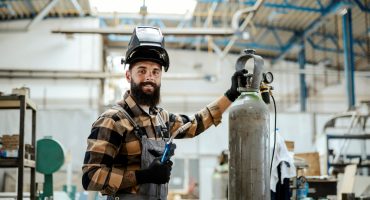
Proper PPE: Protective gear is non-negotiable. Welders must be equipped with a proper welding helmet, safety goggles, a respiratory mask, fire-resistant clothing, and heavy-duty gloves.
Worker Training: Employees must understand the exact hazards of the metals they are working with and how to spot the early symptoms of overexposure.
Continuous Monitoring: Relying solely on ventilation is not enough. Continuous air quality monitoring using portable gas detectors should be viewed as an essential requirement, not an optional extra.
Overall Takeaway
The hazards associated with welding are often invisible, but they carry a high level of risk. The combination of vaporised metals, toxic gases, oxygen depletion, and challenging working conditions creates a uniquely dangerous environment – especially for those in confined spaces or working alone.
The best protection strategy relies on a combination of hazard awareness, strict engineering controls, and the deployment of reliable gas detection technology. By integrating devices like the BW Clip, BW Flex, and MicroClip Series into daily routines, employers can ensure their workforce remains safe from invisible threats.
Contact OBW Technologies for Professional Safety Solutions
If your company undertakes welding activities, safeguarding your employees against fumes and invisible gases is critical. OBW Technologies supplies a comprehensive range of fixed and portable gas detectors designed to meet the rigorous demands of the Irish industrial sector.
Whether you need the maintenance-free reliability of the BW Clip 2yr Real Time, the connected safety of the Honeywell BW Flex, or the compact multi-gas protection of the MicroClip Series, our expert team can help you navigate your risk assessment and recommend the most appropriate equipment for your facility. Contact OBW Technologies today to protect your workplace.
Gamma Radiation Detection: What It Is and How Sites Monitor For ItJul 29, 2026
Most hazards on an industrial site announce themselves eventually. A gas leak has a smell, or a hiss, or a reading on a monitor clipped to someone’s lapel. Gamma r…
The Dangers of Welding: Managing Fumes, Gases, and Invisible HazardsJun 15, 2026
Welding is a fundamental process across the manufacturing, construction, and engineering sectors. While the physical hazards of the welding arc – such as extreme h…
Bromine Gas: Properties, Uses, and Safety Measures You Need to KnowDec 05, 2025
Bromine gas (Br₂ gas) is a member of the halogen family — a group of highly reactive elements that includes chlorine and iodine. Unlike most elements, bromine is a l…